
Editor’s Brief
The technology sector is entering a phase of "perceived acceleration" where AI Agents have transitioned from peripheral assistants to the primary drivers of production. Using a speculative look-back from early 2026, the narrative highlights a total inversion of the programming paradigm—exemplified by Andrej Karpathy’s shift to 80% agent-led development—and explores how the commoditization of code mirrors historical shifts like the printing press and the industrial adoption of electricity. The core thesis is that while technical execution is becoming a zero-marginal-cost resource, the "productivity paradox" remains: real gains only arrive when organizational structures are redesigned around the new technology rather than merely plugging it into old workflows.
Key Takeaways
- The 80/20 Paradigm Flip: High-level developers are moving from writing syntax to auditing logic, with natural language serving as the primary interface for complex system configuration and deployment.
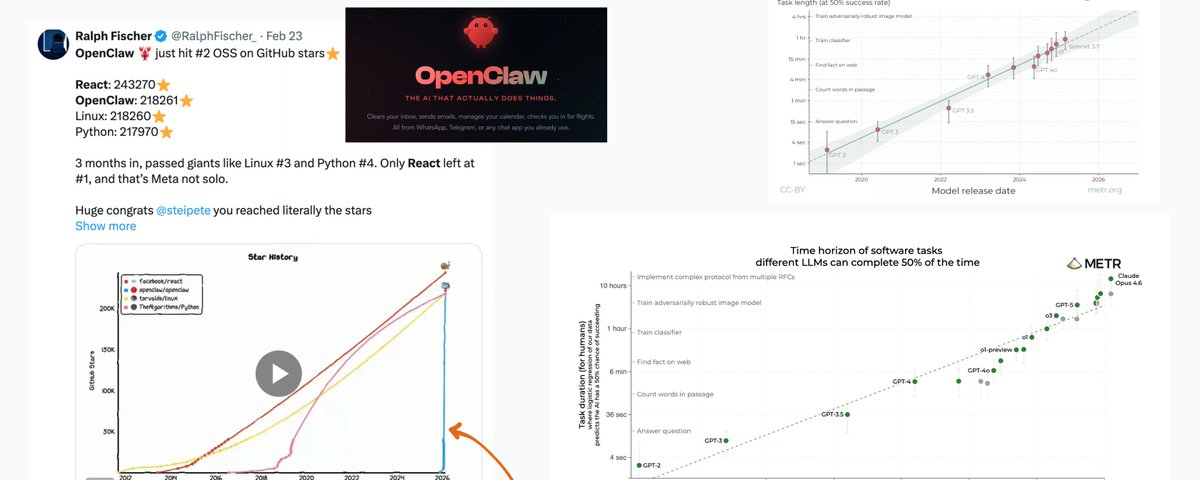
- Democratization via OpenClaw: Tools like OpenClaw are moving agentic capabilities out of specialized IDEs and into common interfaces like Slack and Telegram, lowering the barrier for non-technical users to execute complex tasks.
- The Productivity Lag: Historical data from the electrification of factories suggests that simply replacing old tools with new ones (steam for electric, or manual code for AI) yields little gain until the entire "factory floor" or workflow is structurally reimagined.
- Value Migration and Power Shifts: As the "how" of technology becomes cheap, the "what" and "why" become the new profit centers. Value is migrating from technical implementation to system architecture, product intuition, and user trust.
English translation is temporarily delayed due upstream API instability. Source Chinese version is linked below.
Chinese original: https://novvista.com/p/948/
Editorial Comment
The most striking element of this observation isn't the prediction of faster code; it’s the "body feel" of the acceleration. When Andrej Karpathy notes that his workflow flipped from 80% manual to 80% agent-driven in a single month, we aren't just looking at an efficiency gain. We are witnessing the collapse of a specific type of human capital. For decades, the ability to speak the "language of the machine" was a high-walled garden. Now, that wall is being pulverized.
However, as a senior editor watching these cycles, I find the historical parallels to the "Productivity Paradox" most grounding. We often forget that when electricity first entered factories, productivity didn't budge for nearly forty years. Why? Because factory owners simply swapped a giant steam engine for a giant electric motor, keeping the same cramped, multi-story layouts and belt-driven shafts. Real growth only exploded when a new generation of engineers realized that small electric motors allowed for single-story, horizontal assembly lines—the birth of the Fordist revolution.
We are currently in that "steam-to-electric" transition phase with AI. Most companies are trying to shove AI agents into existing Jira tickets and legacy agile workflows. They are using a jet engine to power a horse carriage. The METR study cited—showing that experienced devs actually slowed down when using AI on familiar projects—is a cold shower for the hype cycle. It suggests that our current "factories" (our codebases and management structures) are still built for the manual era. The friction isn't in the AI's ability to generate code; it’s in our ability to review, test, and integrate it at the speed of thought.
The mention of Jack Dorsey’s radical downsizing at Block is a grim harbinger of the "One-Person Team" era. Whether or not "AI washing" is involved in corporate layoffs, the market narrative has shifted. The "intelligence tool" is now a valid excuse for structural leaness. If one person can truly do the work of a dozen, the very definition of a "company" changes. We move from a world of headcount-as-prestige to a world of leverage-as-prestige.
For the individual professional, the takeaway is clear: move up the stack or get crushed by the commoditization of the middle. If your value is in the "how"—the syntax, the boilerplate, the routine configuration—you are a scribe in the age of Gutenberg. The new power nodes are the "Publishers"—those who can define the problem, architect the solution, and maintain the "data flywheels" that AI cannot replicate.
We are currently in what Carlota Perez calls the "Installation Period"—a chaotic, speculative time of "vibe coding" and explosive app growth. It is noisy, messy, and filled with low-quality clones. But the "Deployment Period" is coming. That is when the dust settles, the bubbles pop, and we stop talking about the agents themselves and start talking about the entirely new business models they’ve made possible. The winners won't be the ones who wrote code the fastest; they will be the ones who realized that when code is free, the only thing that matters is the judgment of what to build with it.
The real danger isn't that AI will replace the programmer, but that we will spend the next five years trying to run "electric" agents in "steam-powered" organizations. The transition requires more than a subscription to a new tool; it requires a fundamental rewrite of how we define work itself.