
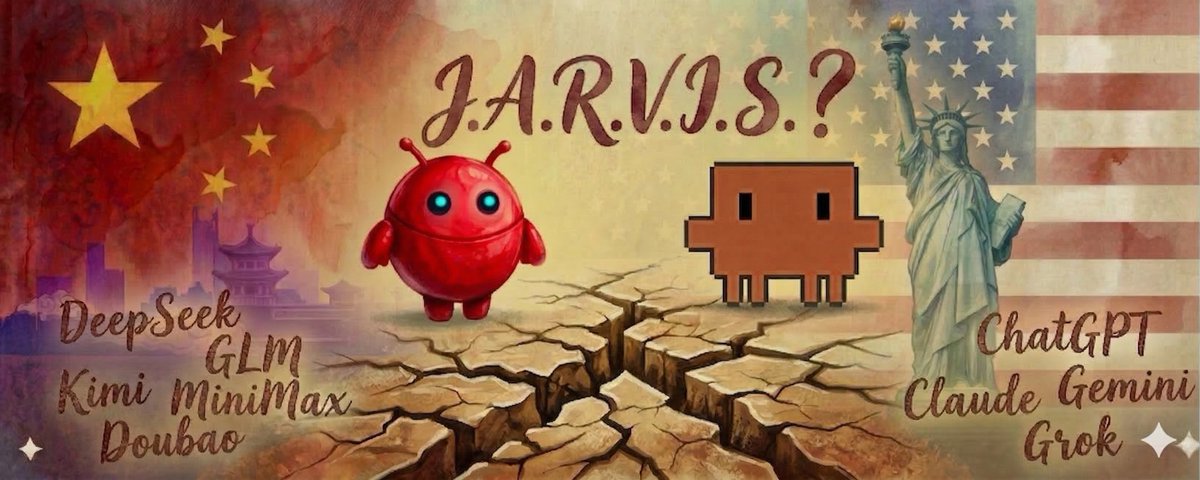
Introduction
The following content has been compiled by NOVSITA based on public content from X / social media and is for reading and research reference only.
Key Takeaways
- 1. The viral popularity of OpenClaw in mainland China is a marketing campaign involving collaboration between the government and businesses, essentially a daily version of the Spring Festival Gala’s “Shake” feature.
- The direct involvement of the Shenzhen Longgang District Government, CCTV, and the Two Sessions aims to promote the rapid implementation of the AI application industry and anchor new economic growth points.
Notes
For parts involving rules, earnings, or judgments, please refer to LU RUIPENG’s original expressions and the latest official information.
**Editing the comment on “LU RUIPENG|A Few Thoughts on OpenClaw and Claude Code” from the X social platform, authored by LU RUIPENG.**
From the standpoint of completeness, the original post packs a high density of key information, especially in its core conclusions and actionable recommendations.
1. The explosive popularity of OpenClaw in mainland China is a coordinated marketing effort between officials and businesses—essentially a “daily‑version” of the Spring Festival Gala’s shake‑the‑phone segment.
The Shenzhen Longgang District government, CCTV, and the National Two Sessions have all stepped in personally, aiming to accelerate the deployment of AI applications and anchor a new economic growth engine. Tencent’s free installation of OpenClaw, the debunked “official” OpenClaw account, and the comedic interactions with domestic AI large models (Minimax, GLM, Kimi, etc.) are all designed to bring their AI into everyday households on a monthly‑subscription basis. After all…
For readers, the most immediate value isn’t simply “learning a new viewpoint”; it’s being able to quickly see the conditions, boundaries, and potential costs behind that viewpoint. If we break this content into verifiable judgments, it should at least cover the following aspects:
1. The wave of OpenClaw’s popularity in mainland China is a collusion marketing effort between officials and businesses—a daily‑version of the Spring Festival Gala’s shake‑the‑phone segment; the Shenzhen Longgang District government, CCTV, and the National Two Sessions have all stepped in personally, aiming to accelerate the deployment of AI applications and anchor a new economic growth engine.
Among these judgments, the
Avoid assuming that platform‑environment differences don’t exist, and don’t mistake “scenario‑based experience” for a universal rule.
From an industry‑impact standpoint, this type of content usually offers short‑term guidance on product strategy, operational cadence, and resource allocation—especially in areas such as AI, development tools, growth, and commercialization.
As editors, we focus on whether it can withstand subsequent factual scrutiny:
1. Can the results be reproduced?
2. Can the methods be transferred?
3. Are the costs sustainable?
The source is x.com; readers should treat it as one input for decision‑making, not the sole basis.
Practical advice: if you plan to act on it, start with a small‑scale validation and scale up gradually based on feedback. If the original text involves revenue, policy, compliance, or platform rules, rely on the latest official announcements and keep a rollback plan.
Reprinting serves to improve information flow, but the true value of the content is created through secondary judgment and localized practice. Accordingly, the accompanying editorial commentary will continue to
1. The recent explosive popularity of OpenClaw in mainland China is a coordinated marketing effort between government and business—a daily‑life version of the “Shake the Spring Festival Gala” gimmick. The Shenzhen Longgang District government, CCTV, and the national two‑sessions all stepped in, aiming to accelerate the deployment of AI applications and target a new economic growth engine.
Tencent offers free installation of OpenClaw, a fake official WeChat account (already debunked), and comedic interactions with domestic AI large models such as Minimax, GLM, Kimi, etc., all designed to bring its AI into ordinary households on a monthly‑subscription basis.
After all, a host of domestic AI companies cannot survive
Claw’s actual capabilities and the risks involved in using it are rarely highlighted by either the government or corporate sides.
Moreover, local governments are simultaneously revising the Cybersecurity Law to tighten VPN controls, pushing OpenClaw adoption, and using IE browsers as a promotional interface in a kind of magical‑realist fashion. This gives the impression that a hastily assembled party committee is acting on a spur‑of‑the‑moment plan to protect Q1 GDP.
AI firms have long benchmarked themselves against overseas “evaluation contests,” flooding the rankings and showcasing our national prowess. As a result, the “application‑service ecosystem” has fallen far behind, user communities lack maintenance, and the online‑lending environment looks like a “wild‑growth, false‑marketing, quick‑profit” ecosystem.
A billion internet users are repeatedly “coaxed” and “
OpenClaw’s effectiveness hinges heavily on the user’s own skill level, following a
DdGuxasAASpbU.png” alt=”” loading=”lazy” />
3.我的评价
现阶段各种Agent还处在野蛮生长、互相借鉴的阶段——OpenClaw是去年11月出现在GitHub上,专注本地化任务的Claude Desktop也是2026年初才上线Mac平台(Windows是二月初)——最终产品形态谁也不确定。
对比,作为用户的我们应该如何选择呢?
如果你是一名行政人员,日常忙于“收发信件、安排会议、整理文档”等繁琐多线工作,可以尝试培养一个OpenClaw,教它你的工作流程、熟悉你的工作方式,培养感情的同时实现一些基础的任务替代。
如果你是日常需要接触行业尖端信息、尝试探索未知领域,再或者你只是一个“废话少说、成品拿来”的唯效率主义者,请直接上手Claude Code,它会让你的人生开挂。
长期来看,Claude Code一定会兼容并超越OpenClaw,并无限接近人们期待中的“贾维斯”。
话又说回来,中国官商之所以力推OpenClaw,恰是因为Claude Code反华,所谓“虾兵易养、蟹将难封”。然而,Claude Code才是Agent界的“扛把子”,普通“大陆用户”此波AI热情
I fear I’ll be led astray.

Source
Author: LU RUIPENG
Published: March 10, 2026 22:09
Source: Original post link